
Giver of Light: PNB's "Cinderella" Returns Poignantly
- Louise Greer
- 21 hours ago
- 13 min read
Updated: 32 minutes ago
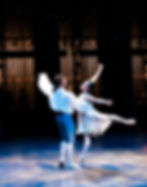
“Partly from the word ‘cinders’ and partly from the Greek word ‘ele’...giver of light.”
-Margaret Fleming-Markarian
Kent Stowell’s Cinderella, last seen mere weeks before Covid-19 distancing measures would shut McCaw Hall’s doors for eighteen long months, returns to Pacific Northwest Ballet like a freshly-polished jewel. It is one of the world’s most universal tales, yet the height of pure poetic symbolism that interweaves Stowell’s reimagined tale casts a vision of kindness that could not have come at a better time. Cinderella is as much an escape into a world of enchantment as it is a reminder of the powers of good to overwhelm the malevolence of the world.
When it comes to any classic story ballet, the question is often what makes any one version unique from the rest. Pacific Northwest Ballet’s Cinderella stands apart in its spectacular orchestration of costume, scenic, lighting, and choreographic design, but most notably in the humanity of Kent Stowell’s refocused storytelling. The 1994 premiere returned the story to its heroine, and by doing so, gives the tale a depth that precedes comic levity. Cinderella has gained a reputation for its comedic prevalence, with a light heartedness that often ignores the psychological and moral undertones of this ancient tale. Perhaps as a means to turn away from the grim versions, and towards a Disneyfied facade, most productions rely heavily on the comic relief of the Stepmother and her clumsy daughters. Even the critic Edwin Denby wrote of Sir Frederick Ashton’s production in 1949: “The big hit of Ashton’s Cinderella is its pair of step sisters… the fun of the farce keeps relaxing the hold of the central story.”
Like his beloved Swan Lake, Stowell’s storytelling capacities carry the ballet with newfound clarity. Stowell has the ability to redesign a story so that its most truly human elements–those themes of perseverance, goodness, and love–prevail above bravura technicalities, though his work is full of such wonders. Stowell places Cinderella among the great ballets by relating it closely to visions of 19th century classics while imbuing it with a free flowing breath. His dashing seasons corps de ballet, almost nymph-like in their ethereal velocity, the symbolism of the balance of good and evil, and the genuinely human quality in his organic choreography make this Cinderella an unsuspectingly poignant tale.
Though the first balletic adaptation of the fairy tale arose in 1813, it wasn’t until the triumphant post-war premiere of Sergei Prokofiev’s score at the Kirov Theater in 1945 that it cemented its place in the classical repertory. It seems unlikely that a score written during World War Two should prevail as the tone of a fairy tale, but Prokofiev spent those wartime years working intensely on “developing the national character of his art” (Nestyev) and the score contains marvelous inventions modeled after the great 19th century Russian ballets. But it doesn’t always carry the fairy tale lightly. Dissonance, uneven meter, unmoored melodies, and an often chaotic, mournful tone fill it with a tenebrous weight.
It was this war-spun tint that prompted Kent Stowell to weave his own tapestry of a score, taking the treasures of Prokofiev’s Cinderella score, and infusing it with other Prokofiev symphonies, operas, and suites. The emotional cohesiveness created by this stitched-together score lessens the emphasis on comedic relief and creates a sweeter, harmonious tone that refocuses the story on its protagonist.

A fairy tale can often float off into the rafters of fantasy, but Stowell’s Cinderella retains its humanity while enchanting at the grandest scope. Martin Pakledinaz’s whimsical and historically-informed costumes shape character in their charming detail. The hues and handpainted nature of Tony Straiges’ scenic designs give the fairy tale some human spirit, and Randall G. Chiarelli’s lighting is a transcendence carrying a great deal of the story by itself.
As opposed to versions derived from Sir Frederick Ashton’s Cinderella, Stowell’s Cinderella is shaped not only by love found, but by love lost- the loss of her mother and of the golden childhood that plays before our eyes with haunting longing. Stowell’s use of memory and dream scenes let us witness first hand Cinderella’s dreams and grief, and later, brings the ball scene back to life while she delights in memory before the hearth. This visual duality between reality and her dream world is not only a genius design of stagecraft, but a poetic rendering that lets us see through Cinderella’s own eyes and mind.
In 1941, Prokofiev told the press, “I see Cinderella not only as a fairy tale character, but as a real person, feeling, experiencing, and moving among us”. Stowell’s shaping of character is exemplary of what potential lies within the score. With the curtain’s rise, we find Cinderella alone, dreaming with a broom in hand, her back to us, while a vision of some pleasant future plays upstage behind a rose-hued scrim. “In good storytelling, you start with the main character,” Kent Stowell once said, and there she is, already at work and full of dreams from the first breath.
Stowell paints Cinderella in a most human hue, and we swiftly come to know her through her full-hearted dancing and spirit. In her work, she is filled with alacrity. She is defined by kindness despite all odds, by the elation she finds in the smallest moments of freedom, and by the elegance that practically sings beside her stepsisters’ chaotic calamities. Magic already blossoms in her imagined pas de deux, and the wistful lift of her skirt hem that mirrors the end of her first pas de deux with the prince is one of many fate-imbued details. There, in the scarlet ball scene, moments before their eyes meet, they come into synchronicity, sight unseen. Another little marvel of destiny designed. Perhaps one of the most defining images of the entire ballet is Cinderella restraining the broom that her father threatens to send upon her stepmother and stepsisters, confirming all we know about her endless virtue.
With a story as well known and cherished as Cinderella, the task of bringing her to life involves freeing her from the expectations of past representations. During opening weekend, she was newly born in each dancer’s hand, freed from every morsel of past image, alive in the present moment as if for the first time.
Clara Ruf Maldonado bears a particularly tender Cinderella. A sensitive creature with eyes full of hope, she carries the weight of circumstance with startling truth that rings forth in the smallest of glances, tensions, and endearing joys. Beside the hearth, her beautifully rich character is lighter than air, slipped so genuinely into Cinderella’s shoes with complete conviction. She’s a young slip of a thing who stands at the threshold of adulthood, and by the end, there she is, lifted by the unfolding events into emboldened maturity.
In Act Two, she enters the ball as if under a spell, enchanted and in disbelief. Kyle Davis, ever so nimble and in awe, has such focus in his work that one might truly believe he saw nothing but his Cinderella the rest of the night. In their variations, what unfolds is an exultation of clarity, a feat of flighty footwork that in the pas de deux transcends into ecstasy soaring through every passionate, sweeping limb. In the moment of recognition after the shoe fits, the supple relief that fills their eyes lets all unpleasantries fade into bliss. Just the two of them amid the soft clouds: her reach, and his content, a breathless swirl of heaven.
Sarah-Gabrielle Ryan dances with her eyes and soul as much as she does with her limbs, and so it is no surprise that her Cinderella is a poetically-crafted soul. Even in her housework and the bustle of her sister’s buffooney, even amidst mistreatment, she is open-hearted, joy-imbued and full of light gaiety. She is a singing soul when she dances, and Ryan finds all the sensitive, glowing inner life of Cinderella that makes her real flesh and blood before us.
Finding herself in the realm of her Godmother, she exudes such pure gratitude that her enchantment is a contagious substance in itself. At the ball, her spirit lets each step stem from character as genuine expression, and though she enters in disbelief of deserving such splendor, that reserve soon vanishes into a full release of elation. As she catches the prince’s eyes during her variation, her charm, giddy momentum, and strength of execution are a swell of fluidity that robs the breath. The sparkling delight in her eyes, Luther DeMyer’s princely adoration…it is all an act of startling intimacy and soul-felt devotion that they find within Stowell’s choreography.
The final pas de deux is a breath of glorious freedom in Ryan and DeMyer’s passionate uncurling. We could have stayed there for hours, watching limbs brush the clouds from the sky in a swirl of bewildering lyricism. But, coming to a still far too soon, bliss lingered in their wake like a spell.
Angelica Generosa draws out breaths, elongates moments of sentimentality, and in doing so, makes Cinderella a fully feeling, thoughtful soul before us. She’s delighted by her stepsisters’ nonsense, and filled with a kindness that beams from within. Her relationship with her father is particularly well crafted, showing a side of youthful delight that softens for a moment the weight of grief that hangs between them. Above all, her sprite, delicate wonder, and uncontained joy are a marvelously bright weaving of character.
The foundation of Angelica Generosa and Jonathan Batista’s magnetic partnership is built upon a deeply rooted trust, yet in these roles, their first encounter is fresh, unplanned, full of novelty and suspense. Cinderella is a ballet that blurs its own technicality, for steps turn into seamless unfoldings of emotion, and the variations of the ball scene are a revelation for them both. Generosa shows us precisely who Cinderella is in each exuberant step, and turning to him with a bright glow in her eyes, is emboldened, dazed, delighted with a whirlwind of feeling. It’s always a beautiful thing when expression overwhelms any thought of choreography, and on Saturday night, there was Batista soaring across the stage, boundless and overtaken by wild-burning thrill.
Generosa and Batista find such luxurious beauty between them that from that very first pas de deux, it is as though they already share a heart. By the ballet’s final moments, there they stand, human before each other, slipping beyond the fairy tale to conquer space and devour the score with fire under their feet, unbridled passion unfurling until it stills into content.
Leta Biasucci and Lucien Postlewaite have told a plethora of tales with shared breath, but watching them step into their last fairy tale together is an act entwined with nostalgia and fate in a single breath. Watching them meet for the first time, one sees not only the potent spell of the present, but the layers of every story they’ve shared gleaming through. Postlewaite is a prince from the first glimpse, all ease and lightfooted uprightness, whose presence, and jubilation sing with a celebration of all the moments that have led to this vision of distinguishing vitality. He watches Biasucci as though she is fate herself, and indeed, her precision growing into dizzying disbelief is a feat of meticulous control and zeal. In the final moments, before a house full of stilled breaths, the intimacy of their unrestrained desire seemed as though it might go on forever, a never ending dream.
In many Cinderella tales, both the Stepmother and her daughters find endless pleasure in the torture of Cinderella, but Stowell’s Stepsisters are too busily involved with their tangled tomfoolery to be much more than indifferent. The mistreatment of Cinderella falls nearly entirely to the cold mother who isn’t particularly warm to her own daughters either. She’s tugged and tousled by them, wrangled by their will, not as endlessly adoring towards her own blood as many versions proclaim, but finding tension there as well. If the Fairy Godmother is in the same bloodline as the Lilac Fairy, then the Stepmother is surely a close relative of Lady Capulet, a perfect foil to Cinderella and her simplest wishes.
Elle Macy articulates the Stepmother with exactitude. She is all upper class splendor and blunt edge, swift and brilliant temperament, with abundant lucidity of character that rings in each tensed finger. She is sharply defined, yet strays from caricature. Determination glimmers like a threat in her eyes, and the propulsive passion that overcomes her as she pushes her own daughters (and husband) aside for a chance to shove her slithering foot within Cinderella’s slipper is a delight like no other.
Stowell found a beautiful balance with the creation of the Stepsisters. They serve as brief comedic levity, but never threaten to overwhelm the plot with their antics. If anything, their wild chaos defines Cinderella’s classical elegance by contrast. In their dance lesson with a most extravagant caricature of a dance teacher (the delightful and perfectly chiseled Joh Morrill), their thrown limbs, sickled feet, and clumsy spasticity act not only as perfect balletic humor, but refine the qualities of Cinderella’s grace and good-natured generosity. Amanda Morgan and Kali Kleiman are a thrill to watch in their delirious freedom. Humor resounds in the smallest glances, and the giddy eagerness that fills those clumpy, pigeon-toed shoes is an indulgence of hilarity. Thankfully, in this rendition of the tale, there are no butchered toes or pecked eyes, only a resolved fading into shadow as the Fairy Godmother’s realm overtakes the scene.

In the theme of poetic details, none shape Stowell’s Cinderella as greatly as his decision to embellish the role of the Fairy Godmother by connecting her to a vast web of goodness. Casting the same dancer as Cinderella’s Memory Mother, her Fairy Godmother, and as the Good Fairy in Act Two’s Theater of Marvels underlays each with significance. Many versions of Cinderella show her mother’s absence in some cherished painting on the wall, but Stowell makes her memory a reality with golden days of Cinderella’s harmonious childhood that wilt before our eyes. Her Godmother, emerging from her beggar disguise, is, like The Sleeping Beauty’s Lilac Fairy, an archetype of goodness. The Good Fairy is a spell of the ethereal, a heavenly respite, who spins a vision of the future in her wise hands.
Melisa Guillams glows in a role of such warmth. In smooth, bewitching usherings of peace, in her supple assurance of goodness, and lush gesture, a glorious mature side of her artistry reveals itself. Likewise, Madison Rayn Abeo takes to the role with a radiant regality. To hold the weight of goodness in a frozen passé, to find the full reach of serenity, it all unfolds like it was woven for her soft limbs to paint the sky with Prokofiev’s harmonies.
There is no mention of the four seasons in any written Cinderella story, but in a fairy tale ballet so focused on time, the fairies of the four seasons arise to help Cinderella on her way. Yuki Takahashi’s levity and clarity of line brings the essence of Spring to life with spritely ease. In Summer, Ashton Edwards finds an idyllic drawn out peace with control as soft as a Summer breeze. Autumn is all Juliet Prine’s fiery strength and delight, an impassioned and stormy thrill with fire under her feet. such dashing vivacity that the Autumn Fairy cannot help but jeté off stage only to remember a bow. Madison Rayn Abeo’s sustain is caught in balance like ice itself in Winter’s reign. Each frozen step and soft grace, the gleaming épaulement, and weightless extension of cherished details, are a hushing spell in her hands.
The seasons corps de ballet is one of Stowell’s inventions that not only adds a large group dance to Act One (an early critique of Ashton’s production), but mirrors in both mood and design, The Sleeping Beauty’s vision scene. Here too, a fairy godmother of the lilac lineage leads the protagonist on her way through a water-hued corps de ballet, recalling visions of nymphs who move like a fervent force of nature. The addition of Prokofiev’s “Mephisto Waltz” lends itself to a meticulous blur of tulle, the entire stage washed in watery tones like Monet’s water lilies in an autumnal gale. Endless shifts in directionality, windmilled arms, engineered feats of interweavings, and inconceivable velocity in both score and step reminds one that exactitude multiplied at a whirring pace is pure balletic delight.
Synchronicity is a powerful force, and in both soulful adagio and brisk, dizzying sprite, Stowell’s masterful hand is evident. There’s something very refreshing about Stowell’s choreography. A lively phrasing of underused steps, and a constant revision of direction brings Prokofiev’s feverish urgency into a whirlwind of exhilarating intricacy. In the ball scene, this ability to string together pearls of unsuspecting steps is particularly evident. Act Two opens fully immersed in a rich scene of swirling scarlet poppies, and there, revolving motion, tightly packed intricacy, and bold sophistication fills every inch of the stage.
Amid this vivid sea of red, Kuu Sakuragi as the Jester proves once again that he belongs to the air. Even McCaw Hall’s large expanse cannot contain his daring flight and boundless momentum splicing the air with glee. What a joy it is, to watch such effortless flight.
Much like the puppet show in Jean-Christophe Maillot’s Roméo et Juliette, Stowell’s addition of a “Theater of Marvels” to the ball scene retells and foreshadows the issues of the entire ballet. The balance of good and evil, represented by the Good Fairy and the Evil Sprite, are joined by Harlequin and Columbine, who play out a most charming, picturesque happily ever after. Wedded by the Good Fairy, they mirror in exactitude how the Godmother will soon bless Cinderella and the Prince.
In the ballet's finale scene, alone upon the endless canvas of a stage, happily ever after begins with a whisper. Stowell’s lyrical blurring of lines between steps while upholding classical integrity is a most glorious vision on which to end a ballet. There, the dream which once filled Cinderella’s daydreams is spun into reality. This is no grand pas de deux, but rather the epitome of free flowing, swelling bliss, and unrestrained passion that few other full lengths paint so vividly. Even as the curtain falls, there they are, still circling in a shower of shimmer as if they might go on forever.
On opening night, I was reminded of the magnitude of effort that humans take to tell each other stories. The story of Cinderella, passed down through cultures, time, and idioms is brought to life by hundreds of devoted souls to wash away all cares for three blissful hours. Perhaps, when that curtain falls, a breath of its goodness will go with you, for as I have always found, it is the wordless stories that touch us most deeply.
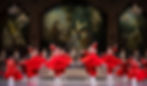
The carriage is waiting! Cinderella runs through February 8th at McCaw Hall and February 12th-16th for digital subscribers pnb.org/Cinderella
Sources:
“Apollo’s Angels” by Jennifer Homans
“Dance Writings” by Edwin Denby
“Symbolism in 19th Century Ballet” by Margaret fleming-Markarian
“Prokofiev” by Israel Nestyev